Showing posts with label book reviews. Show all posts

Monday, October 01, 2007

And So Can You!


Early this evening, I attended a candidates' forum for our town. Audience members submitted questions which were then answered by the mayoral and city council candidates.

After returning home, I joined my family in watching the Colorado Rockies baseball team play their wild card tie-breaker game on TV. The game was forced into extra innings, and things looked pretty grim when the Padres scored two runs in the top of the thirteenth. To make matters worse, the Padres' 'closer' is very good and I must admit I thought it was all over. But in the bottom of the thirteenth, we scored one run. Two runs to tie it. And then the runner on third slid into home plate on a pop fly to score the winning run. The Rockies won the game!

These two events reminded me of a children's book, In the Year of the Boar and Jackie Robinson, by Bette Bao Lord. In the book is a wonderful speech given by a school teacher to her class.

"In our national pastime, each player is a member of a team, but when he comes to bat, he stands alone. One man. Many opportunities. For no matter how far behind, how late in the game, he, by himself, can make a difference. He can change what has been. He can make it a new ball game.

"In the life of our nation, each man is a citizen of the United States, but he has the right to pursue his own happiness. For no matter what his race, religion or creed, be he pauper or president, he has the right to speak his mind, to live as he wishes within the law, to elect our officials and stand for office, to excel. To make a difference. To change what has been. To make a better America.

"And so can you! And so must you!"


Thank you, Lord, for the many ways in which we can make a difference. Thank you for Your Son, who made the ultimate difference. And, dare I say it in the same breath.....GO ROCKIES!!!!

Thursday, August 30, 2007

The Myth of Socialization


My son and I are reading Ray Bradbury's Fahrenheit 451, about a time in the future where firemen start fires. People are forbidden to read books, so it is the firemen's job to burn any house that contains books. Although there are a few people who hide books and read and talk about them, most people are contentedly busy entertaining themselves with various distractions similar to those of today: sports, radio, TV, movies, amusement parks, etc.

The main character, a fireman, makes the acquaintance of a seventeen-year-old neighbor girl who opens his eyes to new ways (actually old ways) of thinking about the world. When she speaks about why she doesn't attend school, you can't help but think it's a compelling argument for home schooling.

"Oh, they don't miss me," she said. "I'm antisocial, they say. I don't mix. It's so strange. I'm very social indeed. It all depends on what you mean by social, doesn't it? Social to me means talking to you about things like this...Or talking about how strange the world is. Being with people is nice. But I don't think it's social to get a bunch of people together and then not let them talk, do you? ...we [students] never ask questions, or at least most don't; they just run the answers at you, bing, bing, bing, and us sitting there for four more hours of film teacher. That's not social to me at all. It's a lot of funnels and a lot of water poured down the spout and out the bottom, and them telling us it's wine when it's not."

Thursday, March 22, 2007

Public Schools


Jim Mullen, author of the book in my previous post, rode the NYC subway and spied this ad:


We're Hiring!
New York Public Schools Want Bilingual College Grads
Qualified as
School Psychologists
Social Workers
Teachers of Special Education
Teachers of Speech Improvement
Guidance Counselors


Then he commented:
New York City public school students are reading two years below grade level. Am I the only one to notice they want everything but regular classroom teachers?

As a teacher (16 years in the government schools), I often wondered about this myself! How thankful I am that we've been able to home school our children.

Monday, March 19, 2007

"It Takes a Village Idiot"


I just finished enjoying the book "It Takes a Village Idiot" by Jim Mullen. The author and his wife lived in Greenwich Village and enjoyed all the perks that urban life had to offer. When Mullen's wife bought a country house in the Catskills, a three hour drive from Manhattan, Mullen initially looked down his nose at the people and their way of life. The book chronicles Mullen's metamorphosis from die-hard New Yorker to a full-time resident of the Catskills. Mullen, with his self-deprecating humor, deftly makes life in the Big Apple look quite futile, while showing the beauty and meaning of living and working hard in the "Boonies."

This is no how-to book for persons hoping to make the move from the city to the country. Nor is it the journal of someone who deliberately left the city for an agrarian lifestyle. The author doesn't appear to be a Christian and some of the language is "colorful," but it's a funny and entertaining read, nonetheless. The longer Mullen spends on their Catskills property, the more poetic he becomes, but he never loses his sense of humor. I was ready for something light-hearted to read, and this fit the bill with just enough food for thought.

In a brief note at the end of the book, Mullen states, "There were six hundred working dairy farms in our...county when we started coming to the Catskills in 1987. There are fewer than two hundred today (2001)." After reading the book, you know that he thinks this is a shame. As do I.

Wednesday, September 06, 2006

Part-time Christian


Honest insight from Frederick Buechner's preface to his book, The Alphabet of Grace.


"I am a part-time novelist who happens also to be a part-time Christian because part of the time seems to be the most I can manage to live out my faith: Christian part of the time when certain things seem real and important to me and the rest of the time not Christian in any sense that I can believe matters much to Christ or anybody else...From time to time I find a kind of heroism momentarily possible--a seeing, doing, telling of Christly truth--but most of the time I am indistinguishable from the rest of the herd that jostles and snuffles at the great trough of life."

Monday, August 21, 2006

God's Layout for the Hour


I am reading a book about Frank Laubach and Brother Lawrence; two men who strove to walk in the awareness of the presence of Christ. I ran across these two journal entries, written by Laubach, a missionary in the Philippines. Both thoughts spoke to me and it is no accident that I "chanced" to read them today!

August 21, 1930
I shall be forty-six in two weeks. I no longer have the sense that life is all before me, as I had a few years ago. Some of it is behind--and a miserable poor part it is, so far below what I had dreamed that I dare not even think of it. Nor dare I think much of the future. This present, if it is full of God, is the only refuge I have from poisonous disappointment and even almost rebellion against God.

January 2, 1932
I resolve to accept each situation of this year as God's layout for that hour, and never to lament that it is a very commonplace or disappointing task. One can pour something divine into every situation.


Today is my birthday (a few more candles than Laubach), and instead of getting to relax with our children, and garden as I had hoped, we spent a couple of hours hoping to retrieve our "dead" car and bring it home. God had different plans for us. We weren't successful in bringing the car home, but I had the opportunity to spend those hours with my mom as she joyfully recounted some of the circumstances surrounding my birth.

Thank you God for my precious mother, and thank you for unexpected time spent with loved ones.

Saturday, June 03, 2006

Plain and Simple


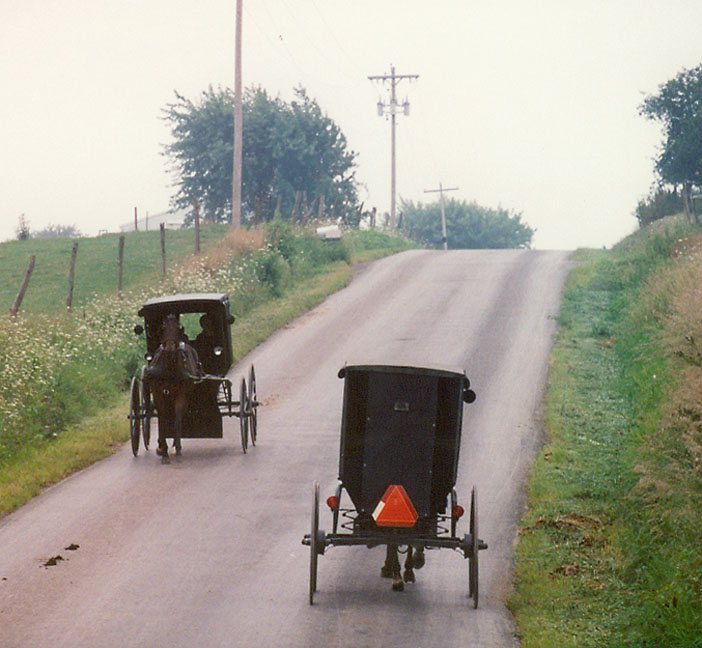
My first glimpse of the Amish was nearly four decades ago, near Wooster, Ohio, while visiting my grandparents. Their clean, uncluttered farms, simple dress, unhurried buggies, and breathtaking antique quilts have captivated me ever since.

After reading a book excerpt on a laniersbooks recent post, I was compelled to reread Plain and Simple by Sue Bender. Mrs. Bender temporarily lived in the homes of two different Amish families (something I very much wanted to do as a teenager), and wrote a book about her impressions of this experience.

I am going to set aside debate on some of the theological beliefs and practices of the Amish. And although I find Mrs. Bender a bit self-absorbed and unappreciative of her gracious hosts, I found some of her observations to be interesting. There are some truths here from which we can benefit.

"Everything was a ritual...No distinction was made between the sacred and the everyday.
Five minutes in the early morning and five minutes in the evening were devoted to prayer. The rest of the day was spent living their beliefs. Their life was all one piece. It was all sacred--and all ordinary."

"Their work time isn't spent 'in order to do something else'--to have free time on weekends...[they find satisfaction] in the daily mastery of whatever they are doing."

"All [Emma's] duties were an expression of her love for her family and for God."

"They lived with a short cord and lived fully, while I had a long cord and was always tripping over it."

Friday, March 24, 2006

One Day in the Life


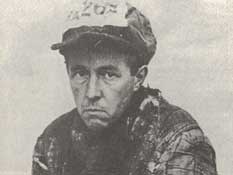
In my quest to read more this year, and to read books I wish had been assigned during my high school or college days, I checked out One Day in the Life of Ivan Denisovich from the library. I guess I have been on a mini Russian kick the past two weeks. I played the Leningrad Symphony, e-mailed my friend in Minsk, Belarus (who wrote back saying not to worry about her), and read Solzhenitsyn's book for the first time. I couldn't sleep until I finished it tonight.

This account of an ordinary day in the Stalinist Siberian work camp is a testament to one man's ability to rise above his captors, maintain dignity, take personal pride in his work, help others, and keep his sanity through an insane situation. At the end of what we would consider a horrific day, he is able to recount the good things that happened and declare it "almost a happy one." And yet, in the very next sentence, the closing of the entire book, he notes that it is just one day out of 3,653 of his ten-year sentence. Just when you marvel how he could have made it through one of these ungodly days, you can't begin to fathom surviving one after another for ten years.

I liked his sparse prose. Sparse, like their meager food rations. Sparse, like their clothing allotment. And like the cold snowy landscape.

Solzhenitsyn is still alive, living back in Russia again since the collapse of the USSR. He signed a copy of this book for the library of the city of Chicago, who has chosen it for their spring 2006 "One Book, One Chicago" selection.

Wednesday, March 22, 2006

Late Night Musings


I played the Faure Requiem at a concert this evening. Such a beautiful piece.

While waiting to go onstage, there was quite a bit of activity in the "green room." The principal cellist was translating Greek, the solo violinist was practicing her part and debating the finer points of her practice mute, the trumpet players joked about how little they had to play, a violist and cellist were discussing Judge Judy, the bassoonists were discussing reeds, and I tried, not very successfully, to read One Day in the Life of Ivan Denisovich. Solzhenitsyn writes about some of the prisoners, "[Alyoshka] and the other Baptists spent their Sundays whispering to each other...They'd been lumbered with twenty-five years a piece just for being Baptists. Fancy thinking that would cure them!"

Can you imagine. Twenty-five years for being a Baptist. Whew! Wonder what they whispered to each other on Sundays. We have so much to be thankful for here in America. We take it too much for granted.

I have a friend who lives in Minsk, Belarus. I hope some of this protesting by the opposition has a positive result. Pray for the people of Belarus. (Photo above is from Minsk.)

Today my son's favorite Cory catfish died. The other Cory stood guard over his little body in the tank so the other fish wouldn't mess with it. My son went out back and dug a hole in the backyard by the Blue Spruce tree. In the snow. Bless his heart. He liked this fish too much to flush it down the toilet. I went outside with him to give it a proper burial before I left for my rehearsal.

Mom said the kids were great. Always makes you feel good to hear that.

Wednesday, February 01, 2006

"Pride and Prejudice"


A few weeks ago I ran across two closely related quotes which went something like this:

You can tell who a man is, not by what he reads, but by what he rereads.

You haven't really read a book until you have read it more than once.


During the school year, when I'm teaching the kids, I don't spend enough time reading just for fun, just for myself. So, I decided to remedy this by rereading Jane Austen's Pride and Prejudice. I just finished it today, and have enjoyed such a wonderful two weeks revisiting the world of Elizabeth Bennet and Mr. Darcy. Last night I read while waiting for my daughter at ballet class, and one of the other mothers saw all of my yellow sticky notes protruding from my book. She asked me if I was taking a class. I replied, "No, I just like to mark the parts with especially good writing." She thought this quite a novel idea (no pun intended!), while I consider it not only normal, but necessary!

So, here's a favorite spot of Pride and Prejudice. One of Elizabeth's sisters, Mary (the bookish one), joins in a conversation about their recent meeting of the "prideful" Mr. Darcy. Mary says, "Pride is a very common failing I believe...human nature is especially prone to it...Vanity and pride are different things, though the words are often used synonimously. A person may be proud without being vain. Pride relates more to our opinion of ourselves, vanity to what we would have others think of us."

Isn't it pride that heavily factors into the fall of Adam and Eve? Disobedience, to be sure, but it was certainly driven by pride. Isn't it our pride that makes us think more highly of ourselves than we ought, and makes us think infinitely less of our heavenly Father than we ought?

God, please forgive me my pride and vanity. Help me to keep my eyes, my heart, my mind, all trained on You!

Sunday, December 25, 2005

"Silent Night, Holy Night"

Although this hymn is traditionally sung at the conclusion of many Christmas Eve services, it so much more suited for Christmas night. It is, of course, a beautiful lullaby about a newborn Baby, the Son of God. First sung in the Austrian Alps on December 24, 1818, this beloved Christmas hymn is now sung all over the world in many different languages. For a good children's book about the hymn and its history, go here.


"Silent Night, Holy Night"
Silent night, holy night, All is calm, all is bright.
Round yon virgin mother and child. Holy infant so tender and mild,
Sleep in heavenly peace, Sleep in heavenly peace.

Silent night, holy night, Shepherds quake at the sight.
Glories stream from heaven afar, Heavenly hosts sing alleluia;
Christ the Savior, is born! Christ, the Savior, is born!

Silent night, holy night, Son of God, love's pure light.
Radiant beams from Thy holy face, With the dawn of redeeming grace,
Jesus, Lord, at Thy birth, Jesus, Lord, at Thy birth.

Wednesday, December 14, 2005

How Then Shall We Teach?

"These commandments that I give you today are to be upon your hearts. Impress them on your children. Talk about them when you sit at home and when you walk along the road, when you lie down and when you get up." Deuteronomy 6:6-7

I'm going through The Divine Conspiracy by Dallas Willard. What I read today paralleled the recent blog discussions regarding turning our children's hearts towards God vs. having children who can spout all of the correct Christian verbiage. Willard states that how teachers and learners operated in Jesus' day was so different from how we attempt to teach and learn today. In order to understand what Jesus is teaching in the Beatitudes, we must first understand how He taught.

"...[T]he aim of the popular teacher in Jesus' time was not to impart information, but to make a significant change in the lives of the hearers... The teacher in Jesus' time--and especially the religious teacher--taught in such a way that he would impact the life flow of the hearer, leaving a lasting impression without benefit of notes, recorders, or even memorization. Whatever did not make a difference in that way just made no difference."

Willard then recalls where he was when he learned that President Kennedy had been shot, in order to prove his point with the following. "We automatically remember what makes a real difference in our life. The secret of the great teacher is to speak words, to foster experiences, that impact the active flow of the hearer's life. That is what Jesus did by the way He taught. He tied His teachings to concrete events that make up the hearers' lives. He aimed His sayings at their hearts and habits as these were revealed in their daily lives."

The parables that we have learned from reading the Bible will "sit in our minds and go off like the 'tiny time capsules' of popular medications. The Master teacher has done His work, or rather, keeps on doing His work."

"Now, Jesus not only taught in this manner; He also taught us, His students to the kingdom, to teach in the same way. He taught about teaching in the kingdom of the heavens--using, of course, a parable. 'So every Bible scholar who is trained in the kingdom of the heavens is like someone over a household that shows from his treasures things new and things old' (Matt. 13:52 REV). By showing to others the presence of the kingdom in the concrete details of our shared existence, we impact the lives and hearts of our hearers, not just their heads."

I don't take this to mean that we don't have our children memorize or write in our home schools. But I think it reinforces the thinking that we need to focus on the hearts of our children. For example, this doesn't mean that we don't memorize scripture, but in addition to memorizing, we teach, and watch for evidence of, hearts that are turned towards God.